Project vision“A Digital Local Plan will create a connected system for plan-making. It will tell the story of how policies are produced making them more transparent, traceable, and easier to understand for everyone involved. This will enable faster plan-making, support greater local plan coverage and build trust.”
Prototypes
Early ideas on a case management page for planning policy teams to manage the plan-making process.
EARLY CONCEPT v.1 29 July 2026
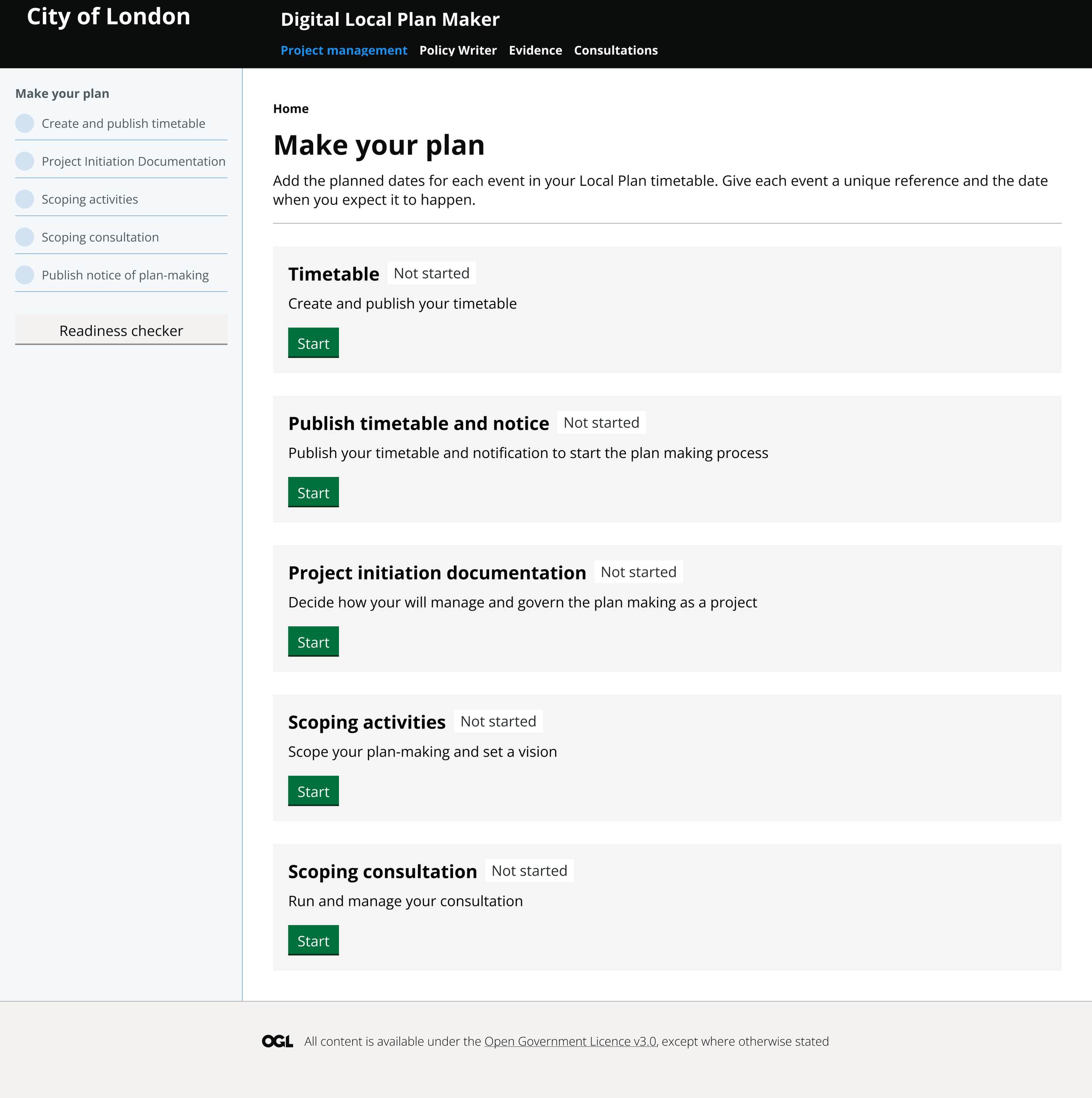
01 Plan-making home screen
Some ideas for preparing and publishing your local plan timetable and required datasets.
EARLY CONCEPT v.1 29 July 2026
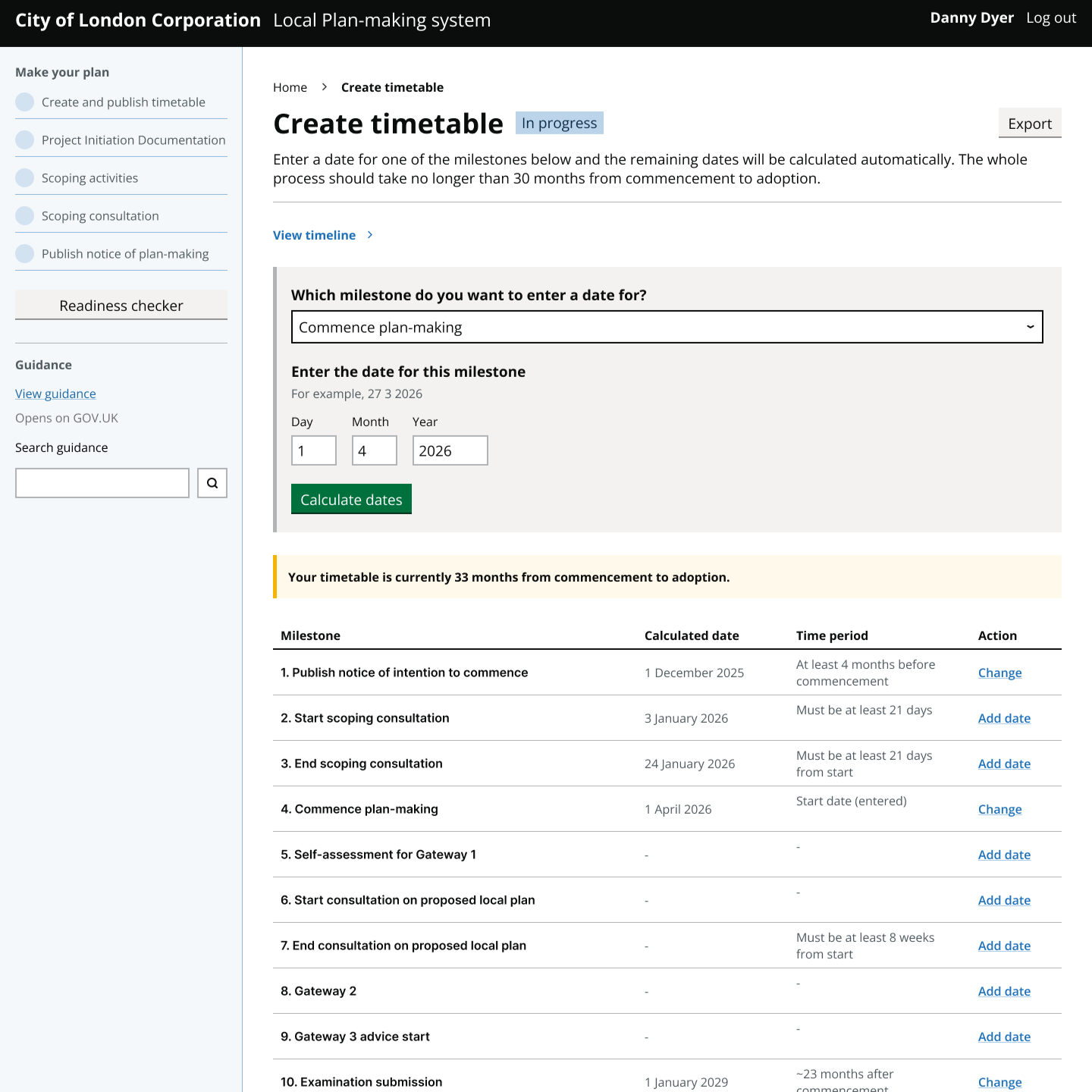
02 Create and publish timetable
A few concepts for managing the scoping activities that planning policy teams carry out in readiness for Gateway 1 self assessment.
EARLY CONCEPT v.1 29 July 2026
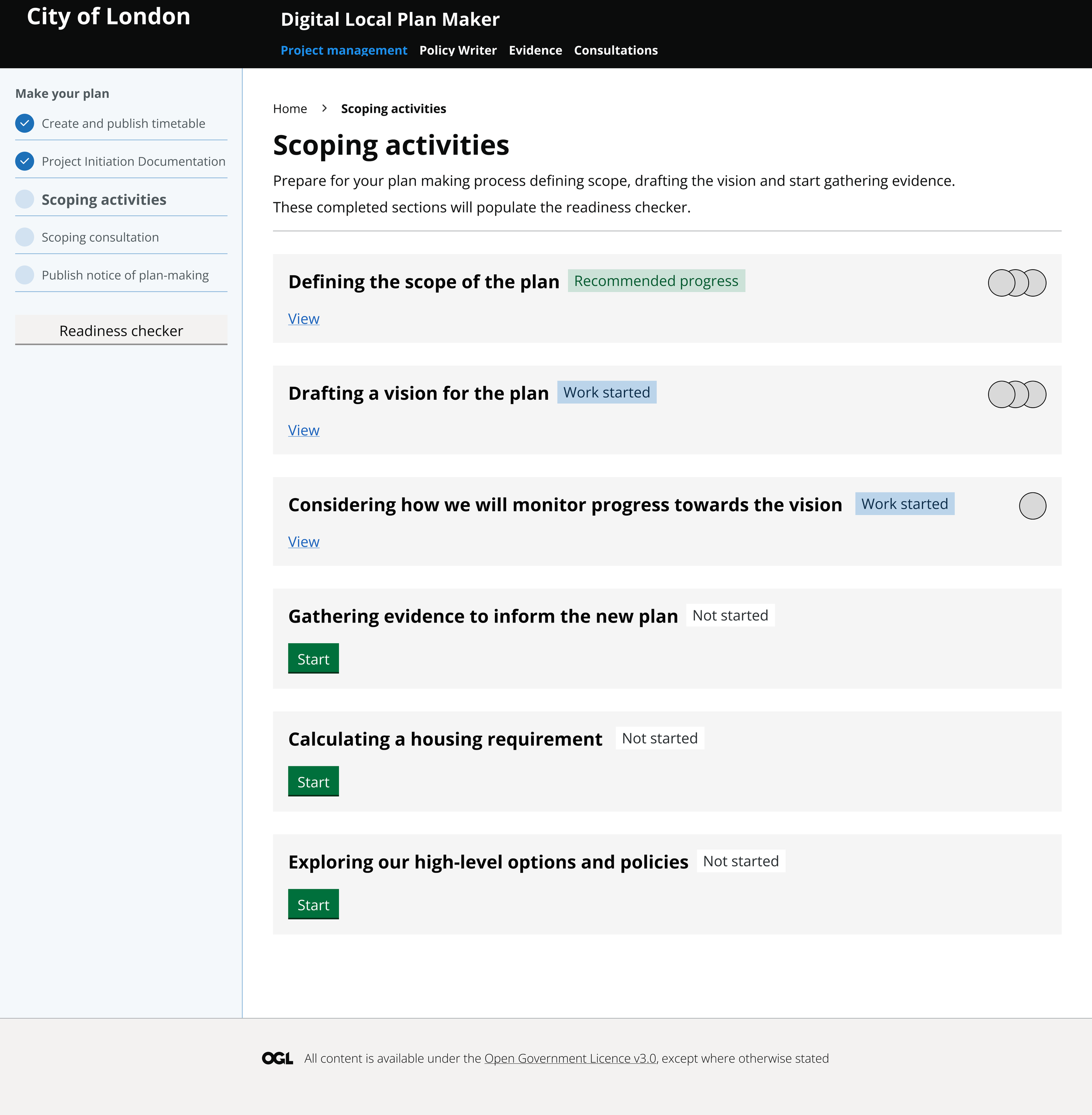
03 Scoping and self assessment
Two approaches to editing, previewing and publishing your notice of intention to commence plan-making.
EARLY CONCEPT v.1 31 July 2026
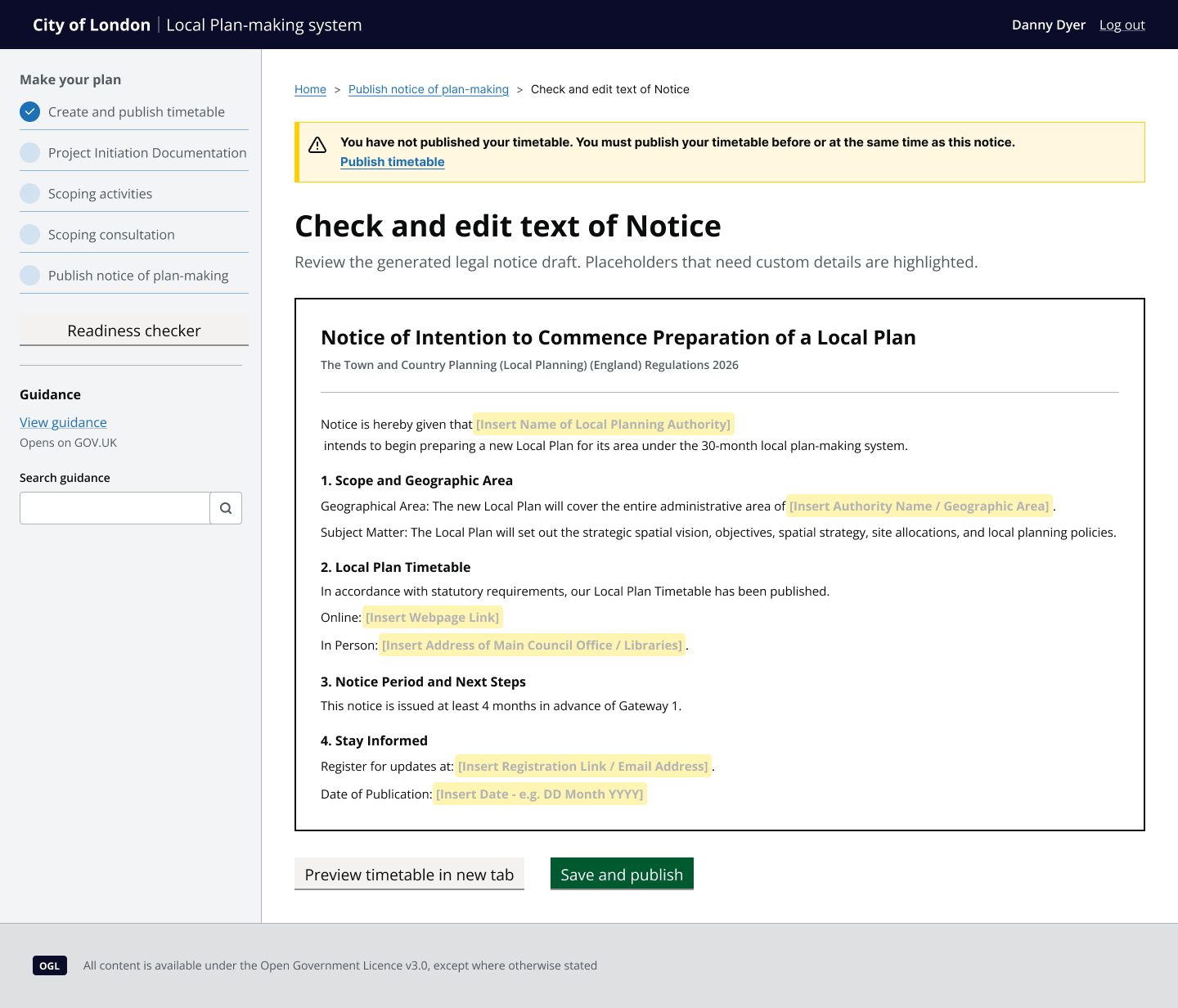
04 Publish notice of Intention
Early ideas on a step by step approach to compiling a Project Initiation Document (PID).
EARLY CONCEPT v.1 29 July 2026
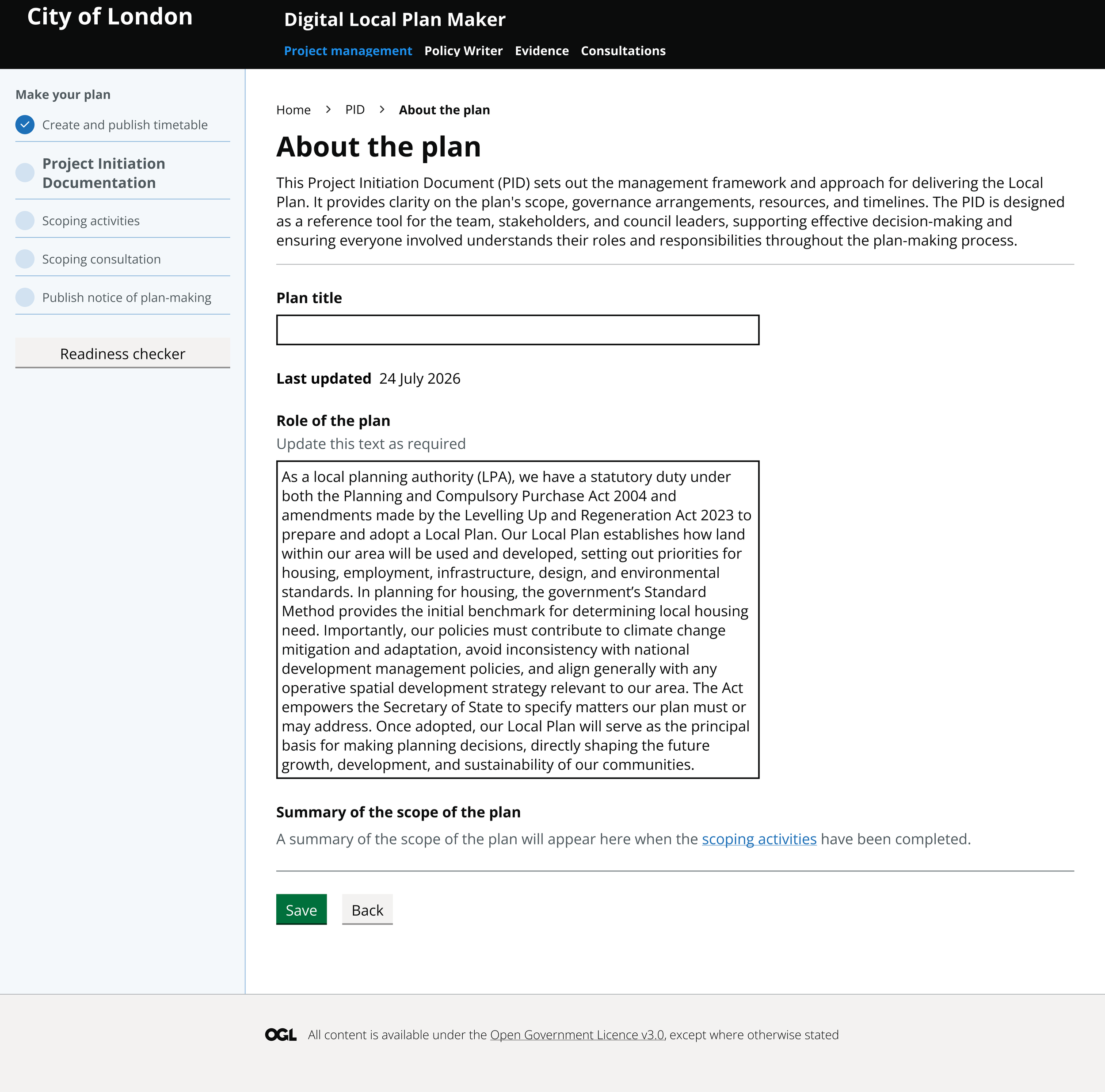
05 Project Initiation document
First concept for a policy drafting tool that enables officer to view sources of evidence while writing.
EARLY CONCEPT v.1 29 July 2026
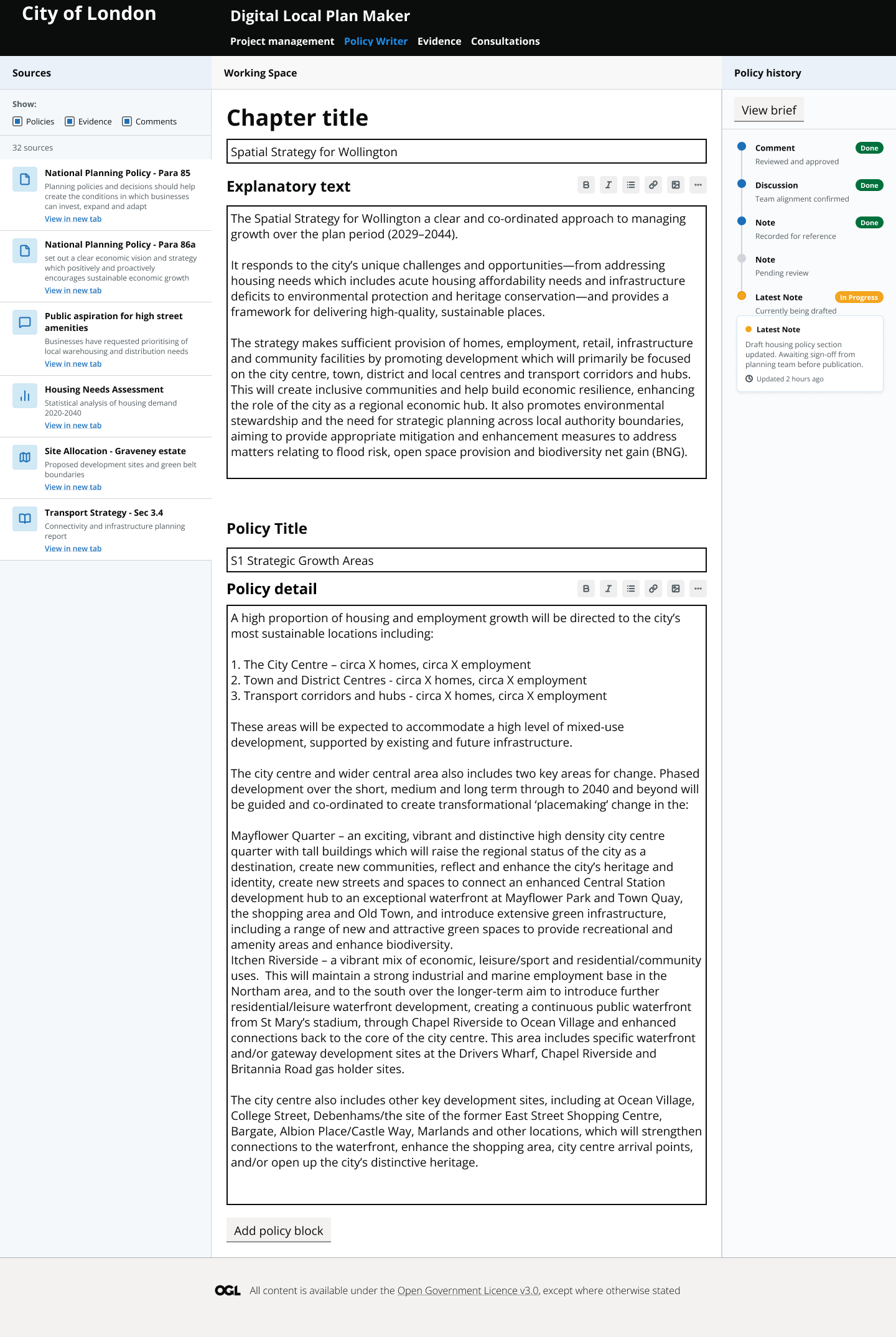
06 Policy writer
Early ideas on a case management page for planning policy teams to manage the plan-making process.
EARLY CONCEPT v.1 7 September 2026
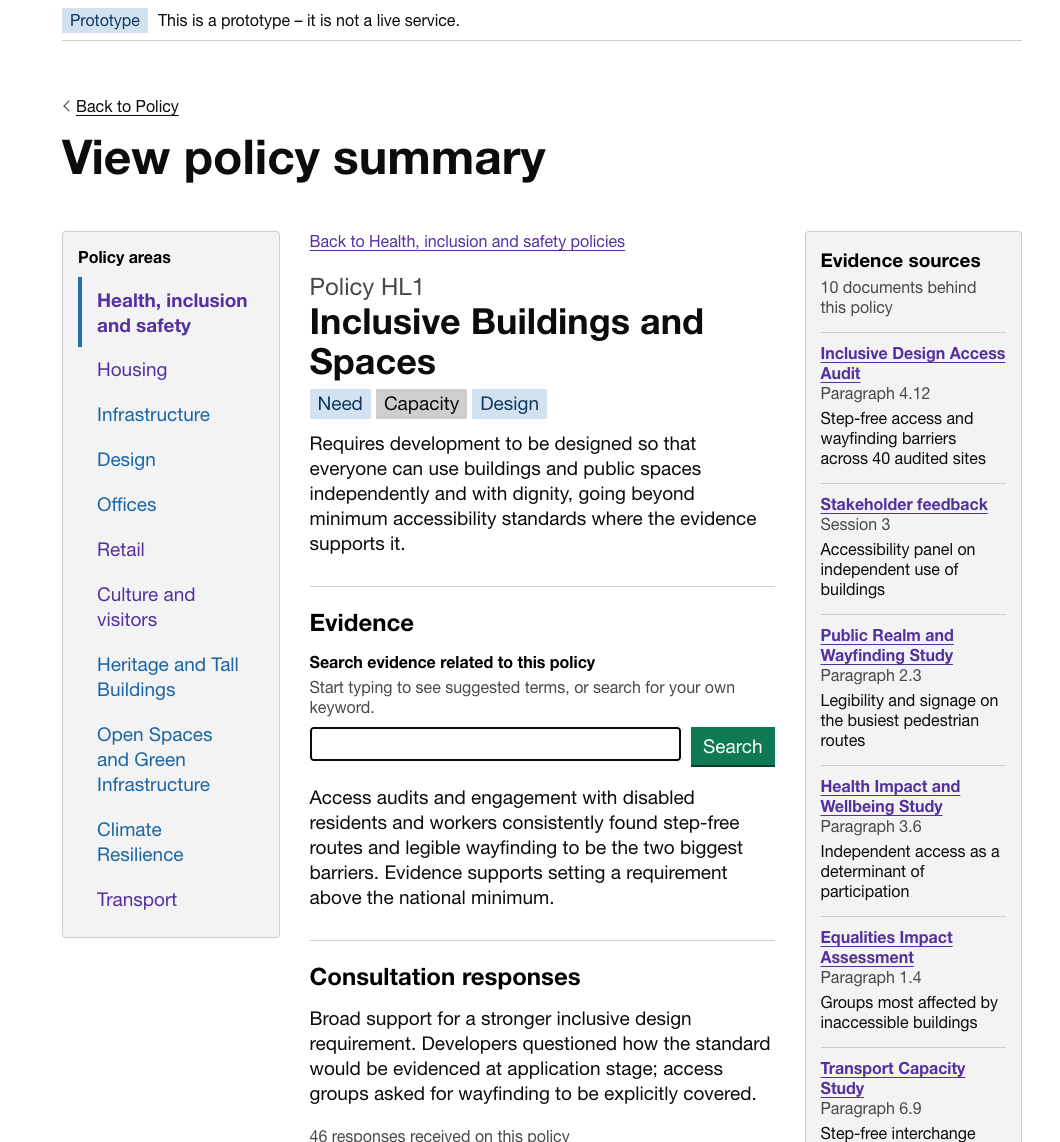
07 Policy summary
About the prototypes
‘Prototypes’ are a version of a thing that help us test out ideas with the real users of that thing. They might show an idea at a very high level, or they might show a very specific feature with detailed functionality. They can range from a sketch to a clickable interface that looks and feels like a real interaction.
We’re using the GOV.UK Design System. This helps us create accessible prototypes quickly using tried and tested components and patterns that many government users are already familiar with.